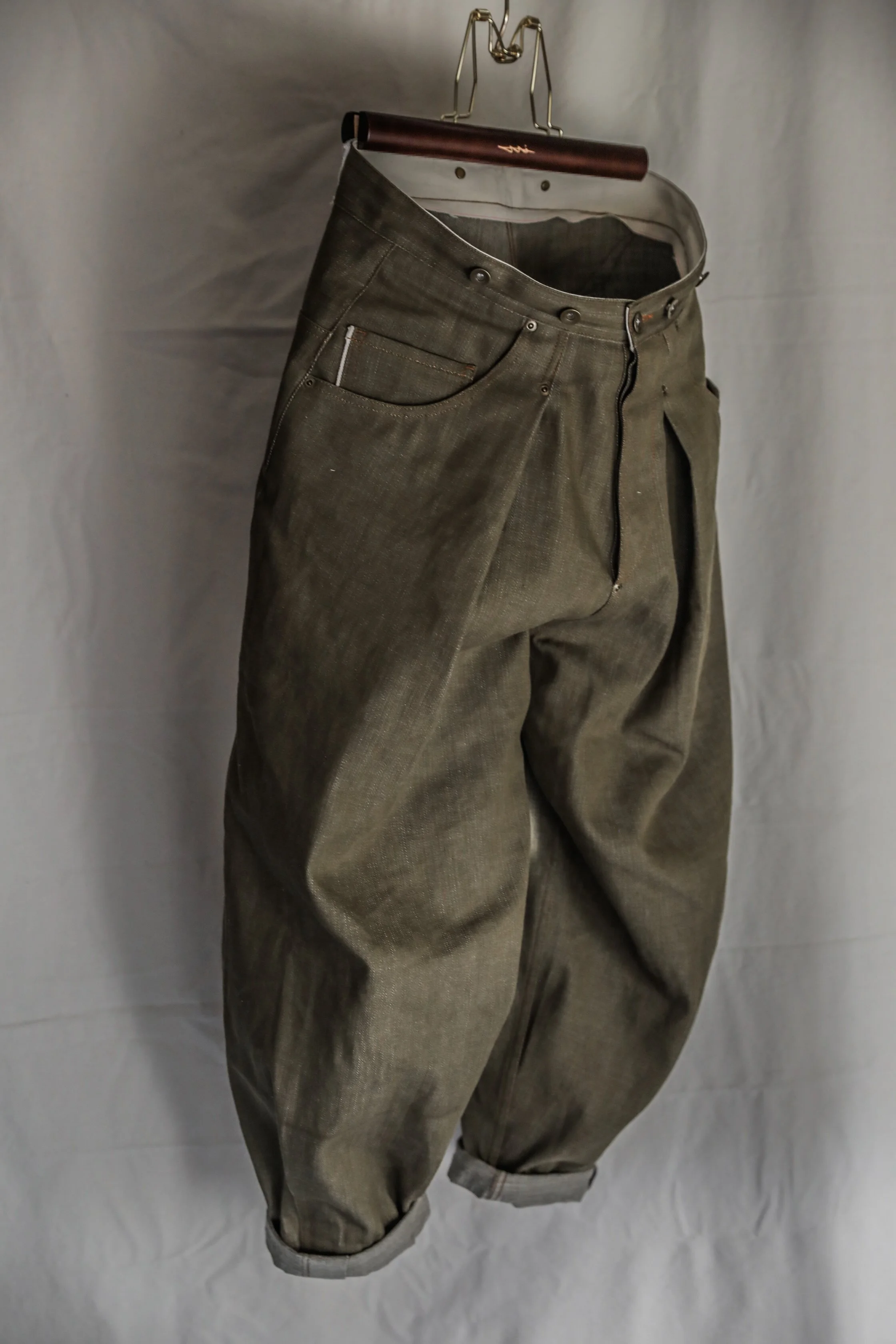
Jeans 01
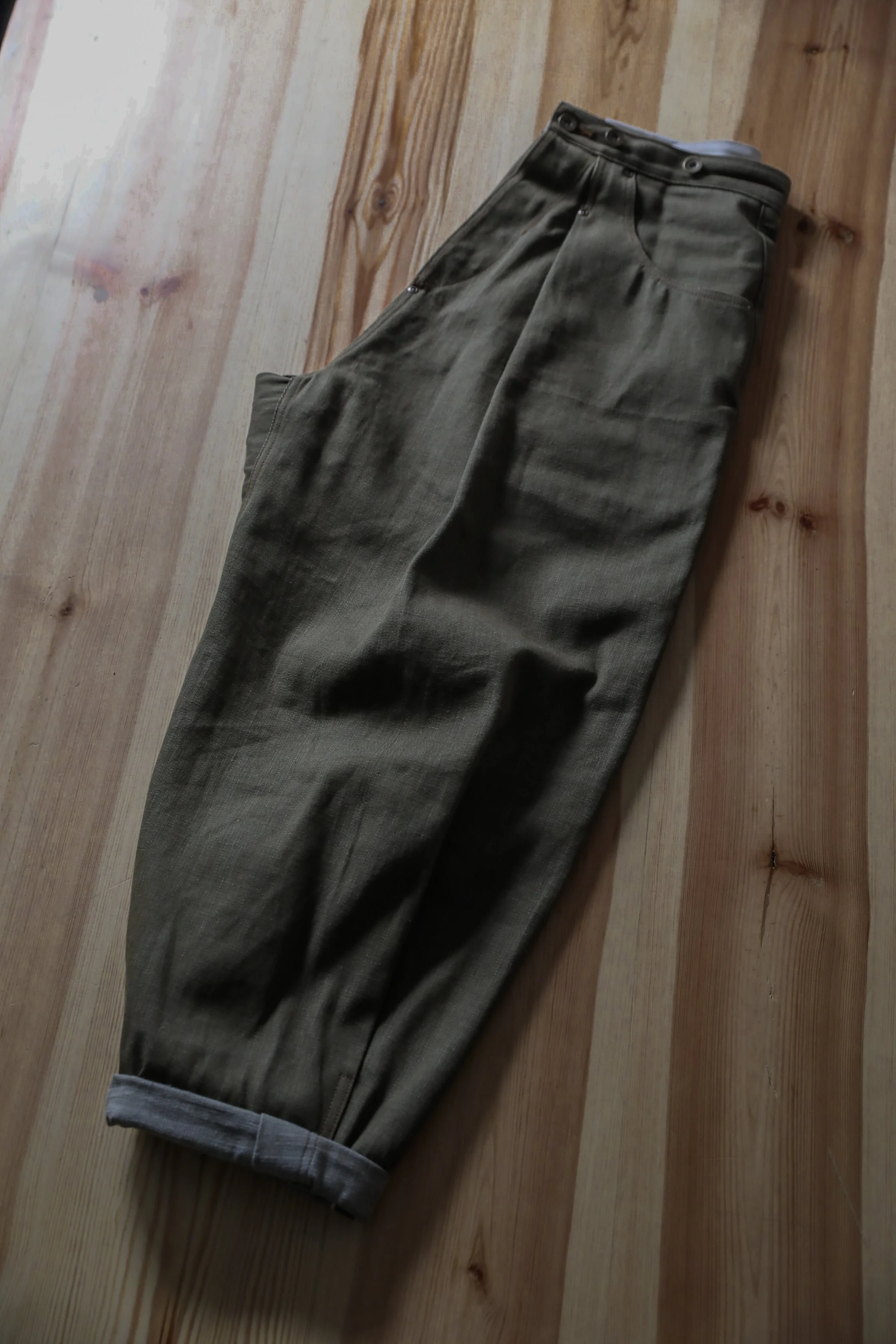
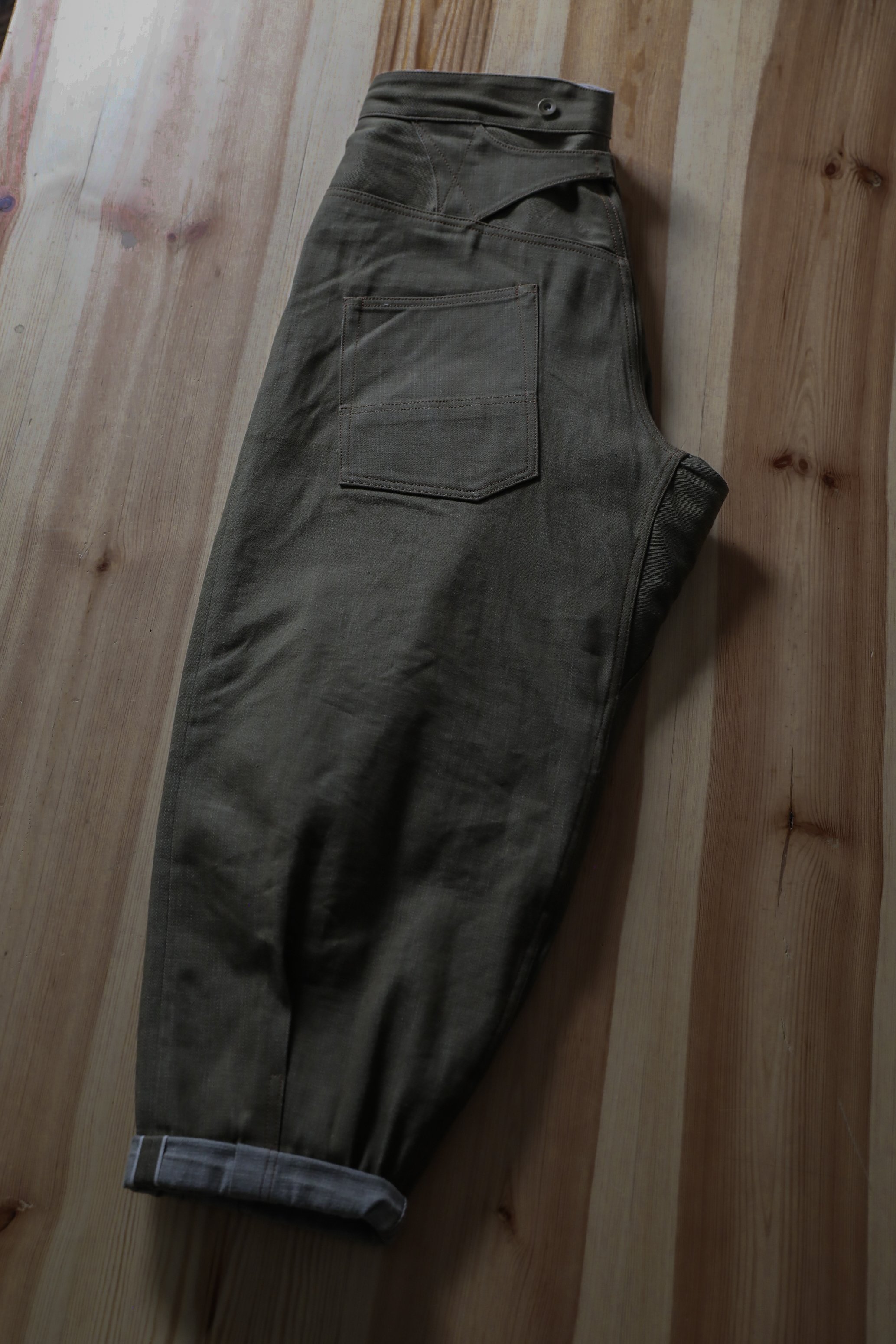
A look into the design process of Jeans01.For the studio’s first RTW item, I explore different approaches to the classic denim jeans. Studying fit, function, volume, etc, in order to find a balance of durable and comfortable piece of clothing. With focus on design and construction, I aim to present a high quality item, with respect to the human form.Workwear has been interpreted by different design schools all over the world, and as experiences shape design, each culture developed their own ways of clothing however they needed them to be. When analyzing these different interpretations of workwear, with all different fabrics, silhouettes, and details, one thing is always common, an understanding of purpose and intention. The rigid jeans focuses on protection and durability, other examples of workwear focus on mobility, storage, breathability, or other needs that relate to specific tasks. Weather also plays a big role in this, silhouettes and fabrics are taken into consideration, from selecting appropriate fibers, to fabric weight, to silhouettes and volumes that allow for air flow. Now the jeans specifically grew so large during a time of massive industrial and cultural developments. From an industrial angle, it was fairly simple in construction, which made it a perfect candidate for mass production, with straight lines, a standard fit, and being fabric efficient, it was easy to manufacture. From a cultural angle, jeans were able to spread worldwide through the US influence overseas, from wars to arts, the “American style” was seen everywhere. This growth made the denim jeans become the standard of what people consider “workwear”. But there can’t be a standard of workwear, as we already established, different practices require different uniforms. Recently, with workwear becoming an important source of inspiration for the fashion world, designers have started to look at a more diverse point of view of what workwear is, through different silhouettes, fabrics, ideas, and other details, they were able to push the “standard of workwear” forward. Now, different interpretations of the classic jeans are being reintroduced, mainly focusing on silhouette and volume. One specific approach, that is influenced by other workwear designs, is the barrel leg jeans, curving the outer seam and adding volume to the knee area, to allow for movement. However, recent applications of the barrel leg seem to be less concerned with intention behind the design and more with style and trend, which becomes an issue as we start to see designs extremely toned down, getting rid of important design and construction elements, which leads to bad execution and lower quality items. The barrel leg jeans is an interesting item to analyze, and I have researched and experimented with it for more than two years now, which is why I wanted it to be the studio’s first RTW exploration. 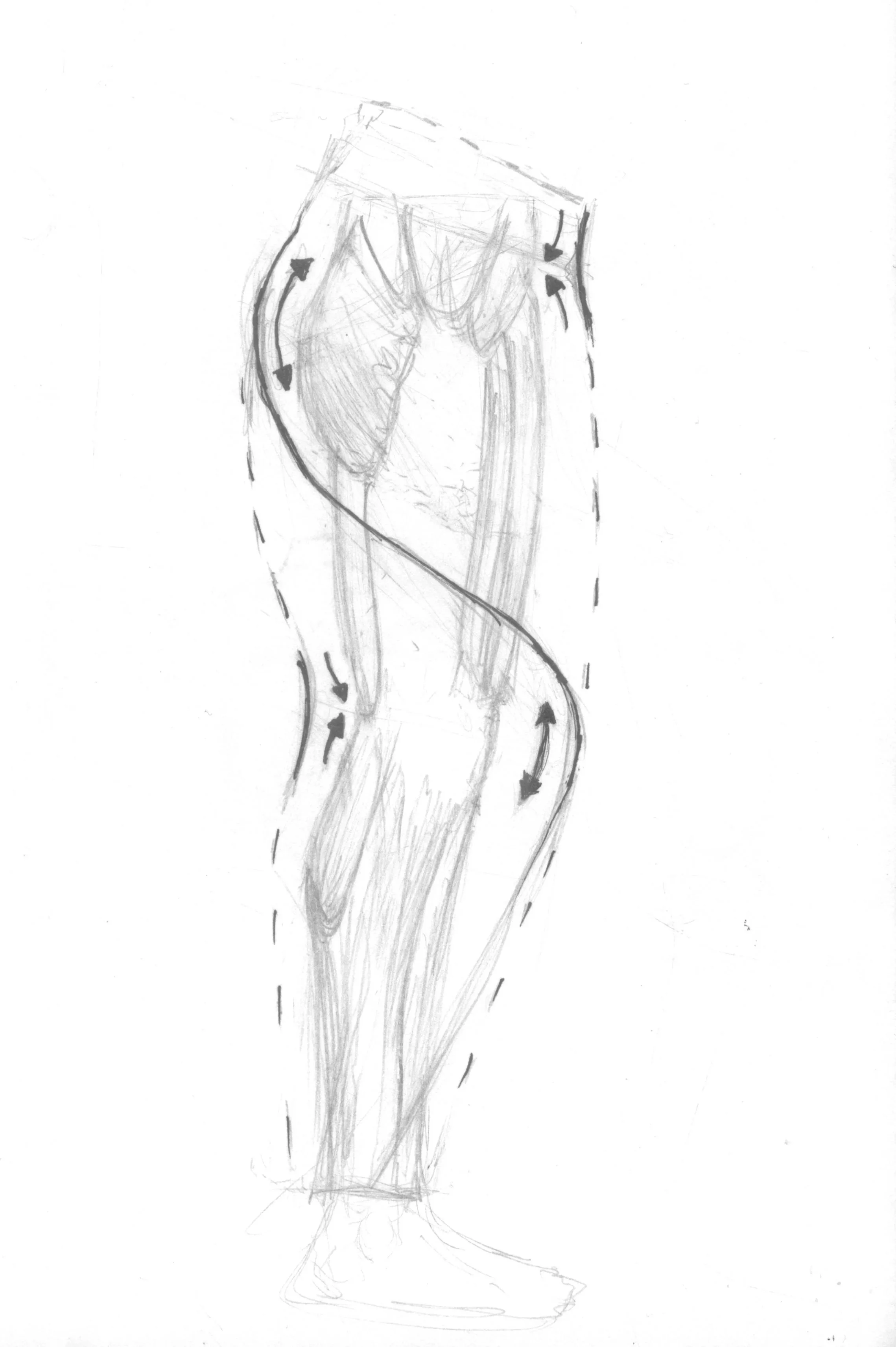
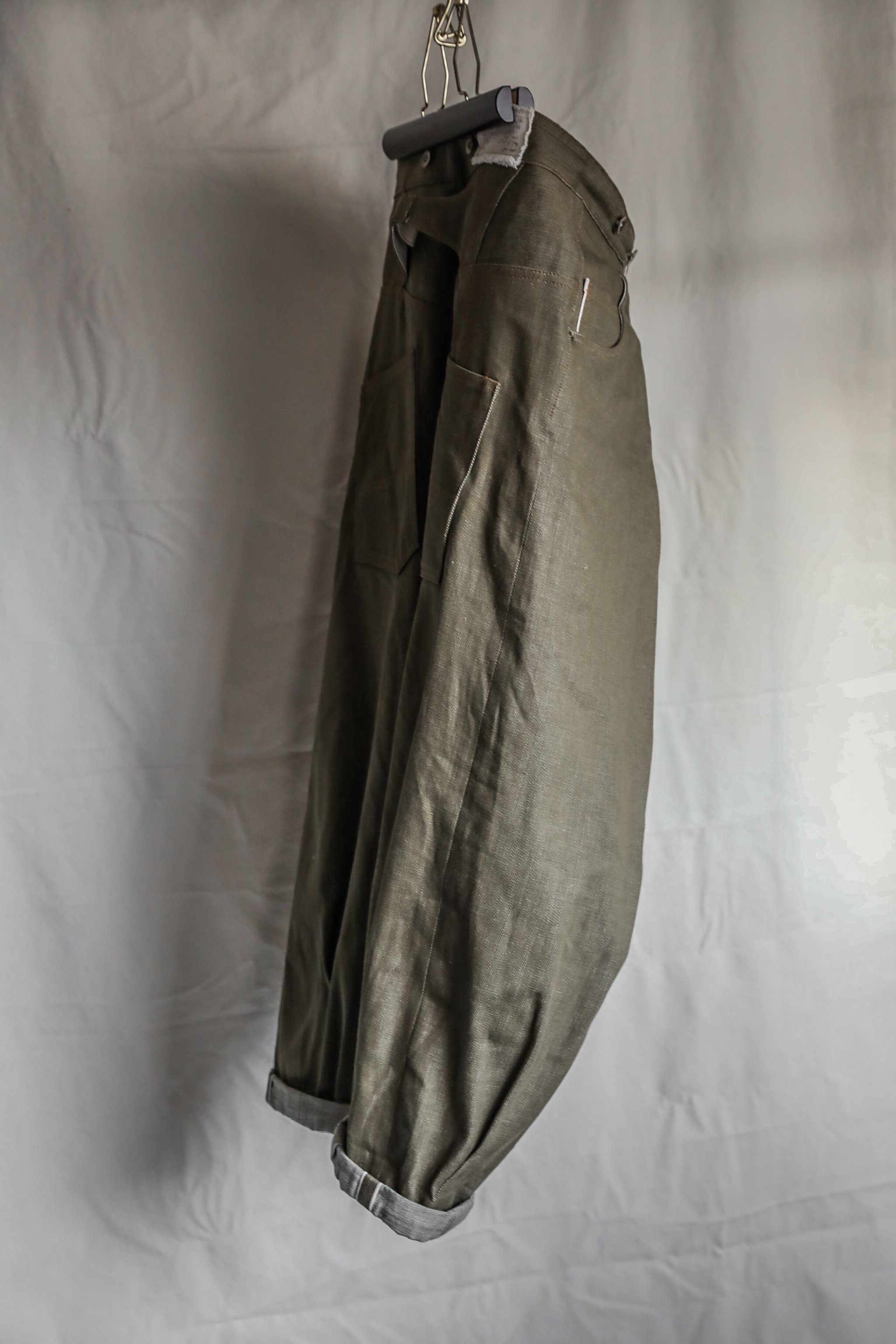
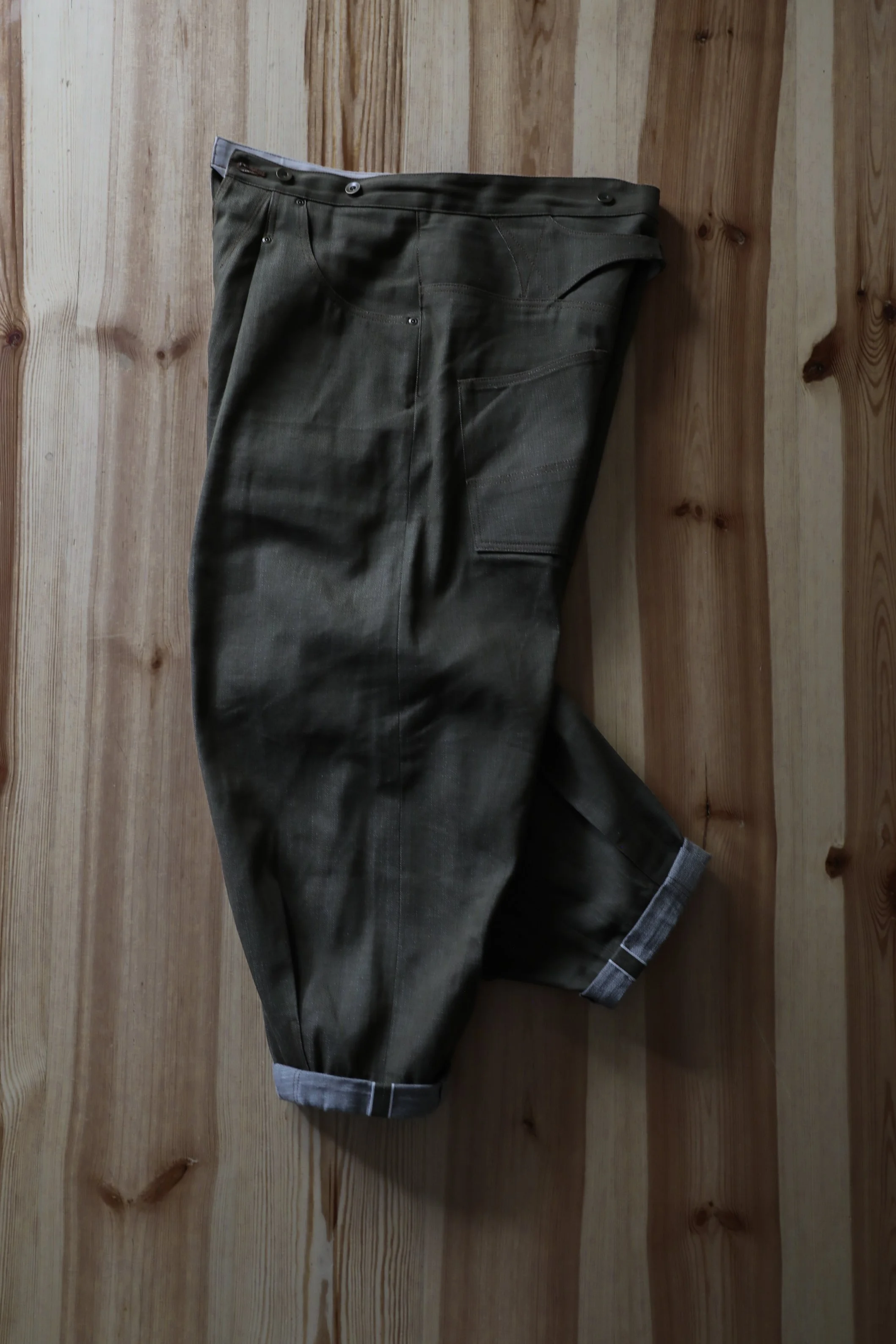
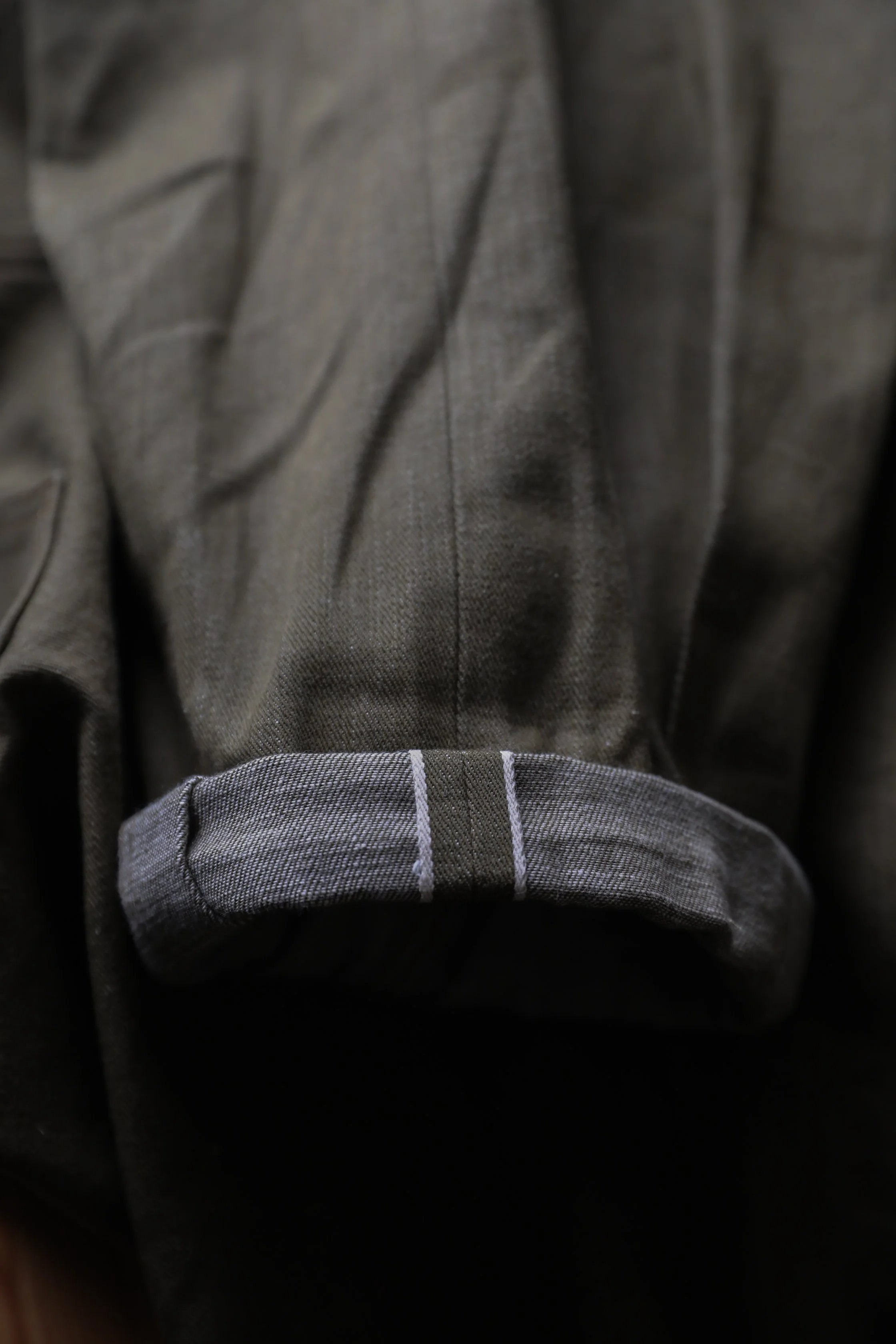
As for the silhouette, my main target was to create a three dimensional barrel leg shape, following the human form and movement, rather than a flat two dimensional shape that is built for a front profile, similar to most of the barrel leg jeans in the market today. When analyzing the body’s movements, leg movements to be specific, there are three point of motion, the hips, knees, and ankles. When in motion, these three joints, from the side profile, form a triangle (or a D shape). This helps understand how and where to distribute volume on a pair of pants. Through this simple study, the silhouette of the jeans was built to create a three dimensional barrel leg shape that allow for volume in both front and side profiles. Patternmaking this piece took some time, finding the right fit, pocket size, pleat position, etc. One of the main objectives was to achieve the outseam barrel leg curvature without sacrificing the selvedge, allowing for less fabric waste and less bulk. And luckily enough, through understanding the actual shape that I wanted to achieve, being three dimensional, I was able to find solutions that would allow me to achieve both objectives at the same time. Most barrel leg jeans on the market today cut the outseam on a curve in order to create the barrel effect, which is what causes them to be rather flat and two dimensional in shape. I also incorporated some elements I came up with through technical and anatomical analysis of the body and the jeans. One of them being the crotch gusset, which plays a big role in the durability and comfort of these jeans. I dive into more detail about the gusset later in this entry. I also wanted to explore the construction of jeans historically, to learn the different ways makers aimed to develop it, technically and aesthetically. Most of these developments have been abandoned now due to mass production systems, for cheaper and faster manufacturing. My aim was to understand and apply some of these details to this design, from the split waistband, to fly construction, to leather washers, etc. Later in this entry, I explain how these jeans incorporate a lot of these details in order to provide a higher quality item.Another goal I aimed to achieve is the “feels just right” aspect, which isn’t scientific, but it is instinctual, it’s part of the experience of wearing clothes. You feel this with your favorite piece of clothing, where the pocket is just the right size for your everyday essentials, or the fly is smooth when you close it or open it, or when you can move freely without restriction, it’s the piece of clothing that you subconsciously reach for, because it “feels just right”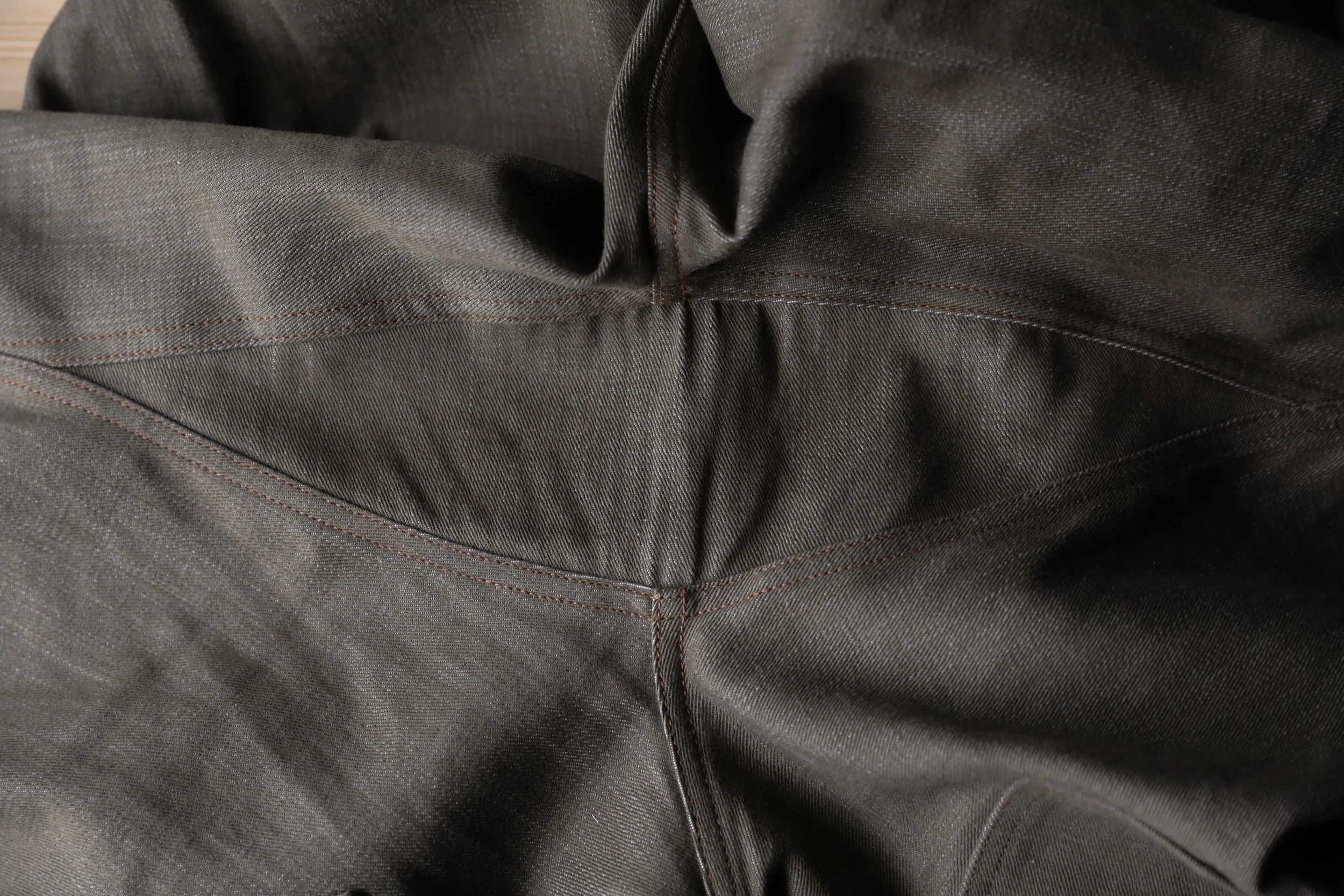
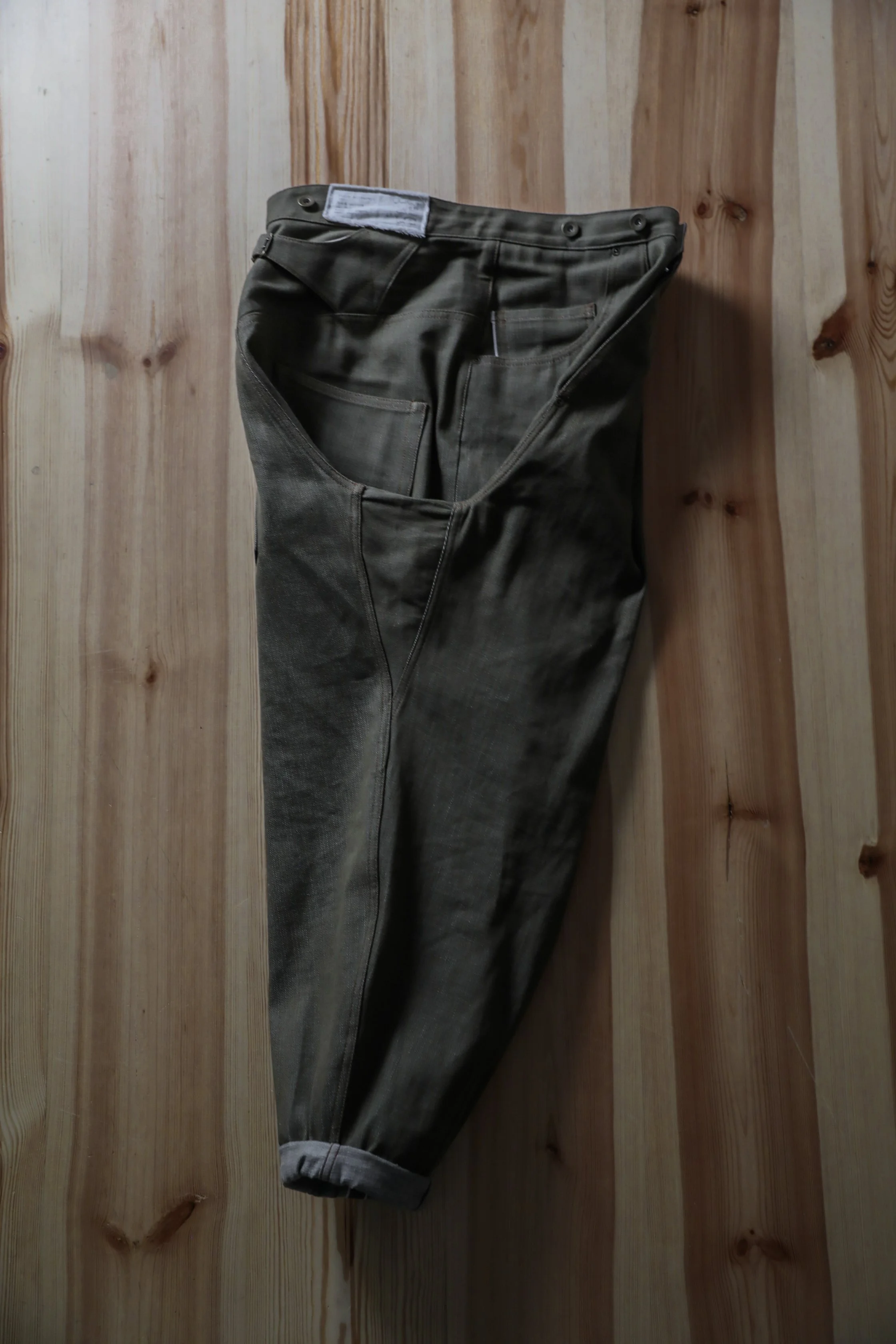
Crotch gusset
The crotch area of the jeans is known to be the most prone to wearing out, since it is both a tension point and a high friction area. Usually, the thick edge of the flat felled seam, with constant use, rubs against the other side wearing it down until it becomes a hole. This is one of the main issues occurring frequently in jeans, and is certainly not one that adds desired character or aesthetic. Attempting to prevent this issue, or at least delay it, this design includes a crotch gusset. The gusset addresses multiple factors contributing to the issue. Firstly, it eliminates the flat felled seam that creates the uneven thickness that rubs against the fabric and wears it out. Secondly, as it is one piece of fabric instead of an interception of four seams, it is also more resistant as a stress point, increasing the life cycle of the pants. Now if the gusset wears down after a while, the issue becomes quite easy to solve due to the gusset being its own separate piece. Holes in jeans are fixed by darning, which is a technique used to introduce new yarns on to the fabric and running them with stitches back and forth blending into the fabric. The gusset then allows for easier fixing of the holes, being a singular flat piece of fabric, darning should be much simpler to do. In addition, any extreme tear that can’t be fixed with darning could also be solved by replacing the panel as a whole.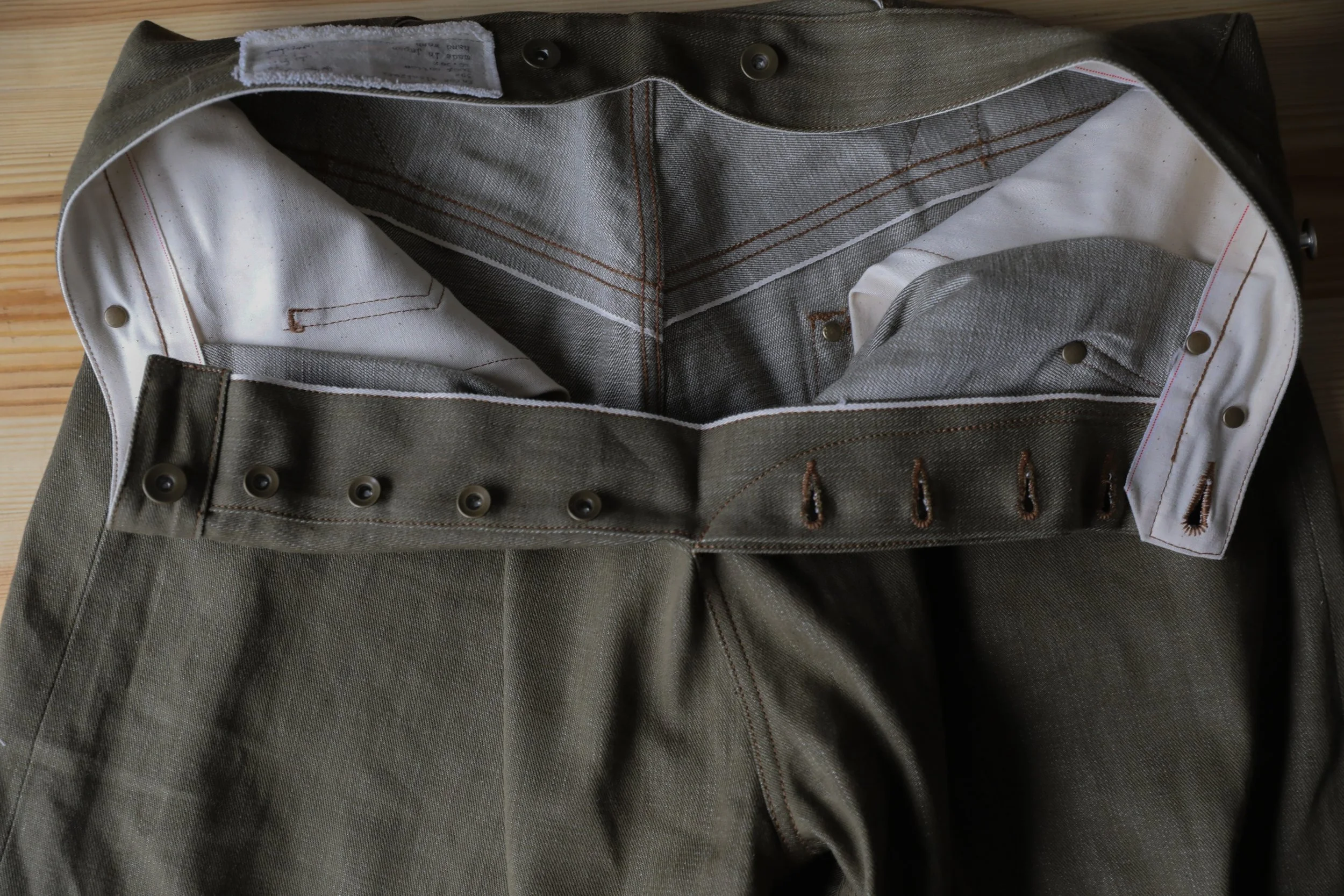
one piece button fly
The fly construction is a one piece button fly, a technique patented by David Neustadter in 1877 for jeans construction, making the fly more durable, although it was ignored by factories due to its inconvenience for fast production. When I learned about this technique, I couldn't find a current application of it. Until I came across Paul Kruize (paulkruize.com , a bespoke tailor with a focus on denim), who has recently popularized this technique, sharing his methods and incredible works online. Now, this fly construction method is being reintroduced by individual makers. As a singular piece of fabric, the one piece fly offers a more durable and cleaner substitute to the traditional fly construction. 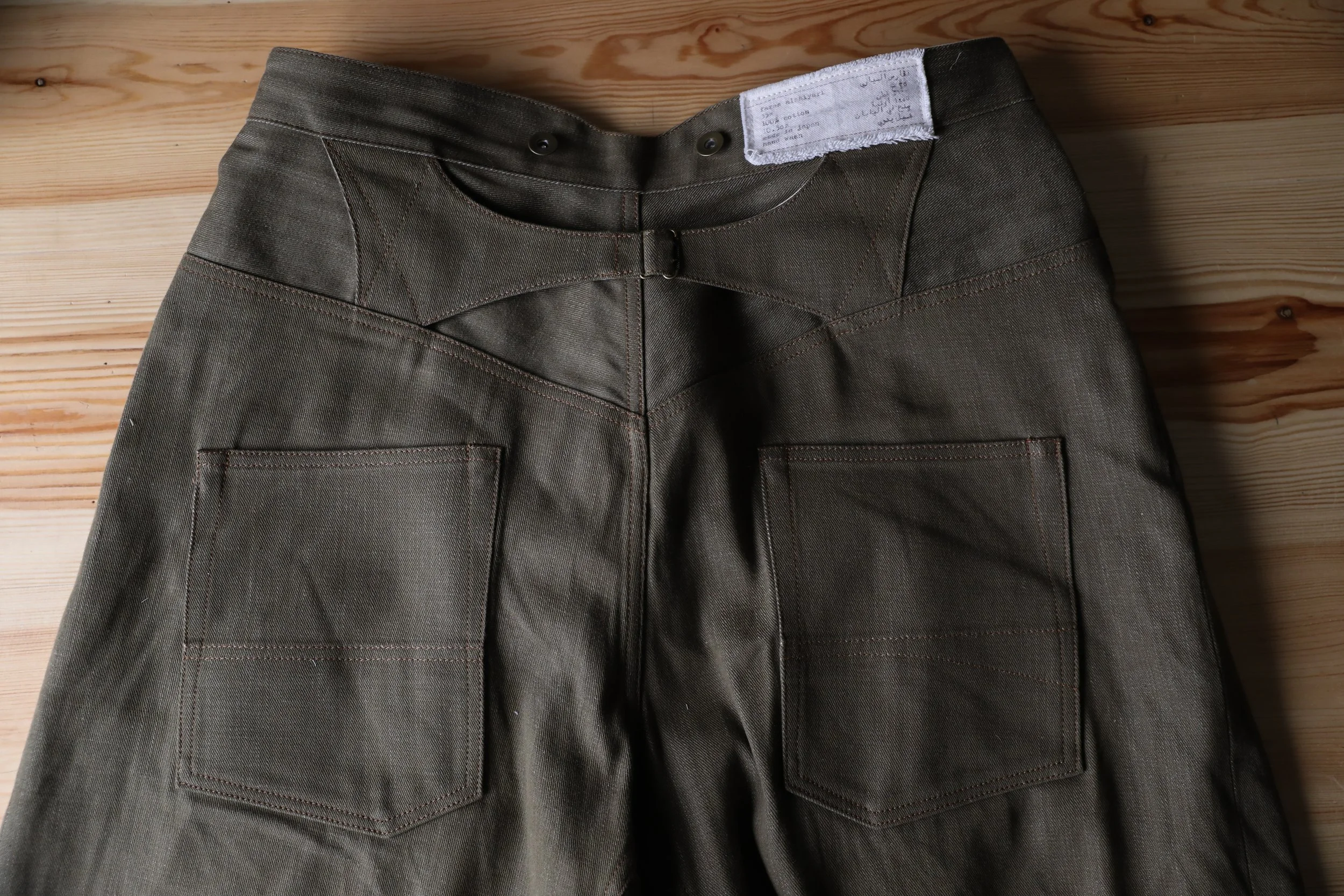
back cinch
Other minor details include:
Back cinch: Size adjuster in the back feature two sharp pronged teeth.
Leather washers: a layer of leather between the metal and the fabric, serves as cushioning for buttons and rivets against the denim offering more durability.
Back pockets lining and hidden rivets: Back pockets backed with a second layer of fabric for more durability, and hidden rivets for comfort.